


'Don't panic:' Nobel-winning economist Paul Krugman says the bond sell-off shouldn't trigger a freakout on the national debt
'Don't panic:' Nobel-winning economist Paul Krugman says the bond sell-off shouldn't trigger a freakout on the national debt

Joseph Zeballos-RoigThu, August 20, 2026 at 10:15 AM UTC
6
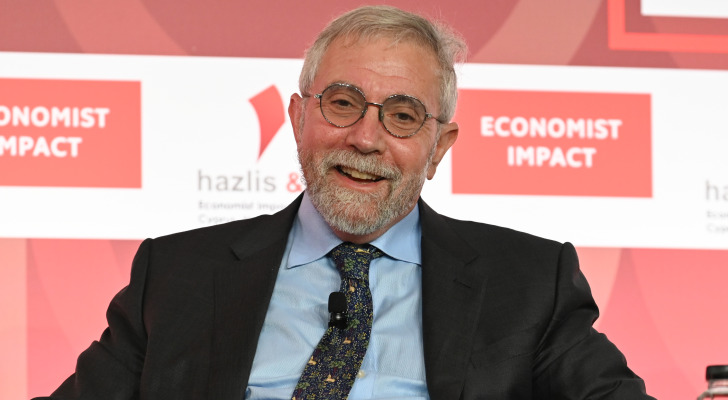
Treasury bonds hit their highest level in nearly 20 years earlier this week. Nobel Prize-winning economist Paul Krugman argues this isn’t the time for panic.
An ongoing sell-off pushed 30-year Treasury bond yields to 5.3% on Tuesday, a level not seen since 2007. German and French borrowing costs also hit their highest levels since 2011 and 2008, respectively. Across the world, investors are unnerved about the fallout of the Iran War and the inflationary shock it unleashed throughout the global economy.
Must Read -
Dave Ramsey warns nearly 50% of Americans are making 1 big Social Security mistake. Here’s what it is and 3 simple steps to fix it ASAP
Jeff Bezos backs a platform that lets anyone invest in rental homes for as little as $100 — 6 ways to build wealth like a landlord without actually being one
Millionaires under 43 hold only 25% of their wealth in stocks. Here’s where their money is actually going
In the U.S., those anxieties are coupled with the growing pace of U.S. government spending, which is nearing a milestone: The national debt is projected to hit $40 trillion by the end of the month. Krugman, though, is calling for cooler heads to prevail.
“I have a message for future policymakers: Don’t panic,” Krugman wrote in a Substack post published Wednesday. “Don’t let the usual suspects undermine your policy agenda by scaremongering about interest rates and government debt.”
What’s fueling the latest sell-off
Bond yields dictate the amount in annual interest that an investor is expected to receive for holding the bond. They help influence borrowing costs for mortgages and the federal government’s interest payments on the national debt, as well as corporate and auto loans.
Krugman attributes the rising bond yields to demand for credit from the federal government for its regular interest payments. Also at fault are the hyperscalers caught up in the AI boom like Meta and Google. He noted that the AI giants were once able to finance their expenditure relying solely on their profits, but increasingly lean on corporate bonds.
“The hyperscalers are not the only players looking for credit,” Krugman wrote. “Thanks in large part to the Trump tax cuts, the government deficit is now huge.”
Advertisement
The national debt stands at $40 trillion due to increased government spending under both Republican and Democratic administrations, stemming from wars in Iraq and Afghanistan, economic crises and pandemic relief efforts. Trump signed a law last year that extended his signature tax cuts, and it’s expected to add $3.4 trillion to the national debt through 2034, according to the Congressional Budget Office.
Krugman, though, poured cold water on the idea that the US could resemble Greece, a southern European nation that went through a debt crisis in the early 2010s and was pushed out of global borrowing markets. Much of that is due to the US’s ability to borrow in its own currency, he argued.
“There is very little evidence that fears of a Greek-style crisis are driving interest rates now,” Krugman said.
Read More: 4 simple ways to grow your cash without touching the stock market
The Treasury is stepping in
The Treasury Department announced on Wednesday that it was going to at least double the rate at which it repurchases its own bonds from investors in an apparent attempt to quell unrest in the bond market.
The buyback program will stretch from Sep. 9 through Nov. 4 with a ceiling of $4 billion per weekly operation, up from its current level of $2 billion. Buybacks will affect longer-dated bonds, starting with 10 years. Observers, though, caution that the intervention may have only a limited effect in reassuring investors.
“While it can help bring down longer-end yields in the immediate/short term, thus helping mortgage and other borrowing costs, it risks collateral damage and unintended consequences,” Mohamed El-Erian, an economist and professor at the Wharton School of Business at the University of Pennsylvania, wrote on X. “[Moreover], the effects of this financial engineering are short dated unless followed by fundamental policy adjustments.”
This article provides information only and should not be construed as advice. It is provided without warranty of any kind.
Source: “AOL Money”
